


What is Glaucoma?
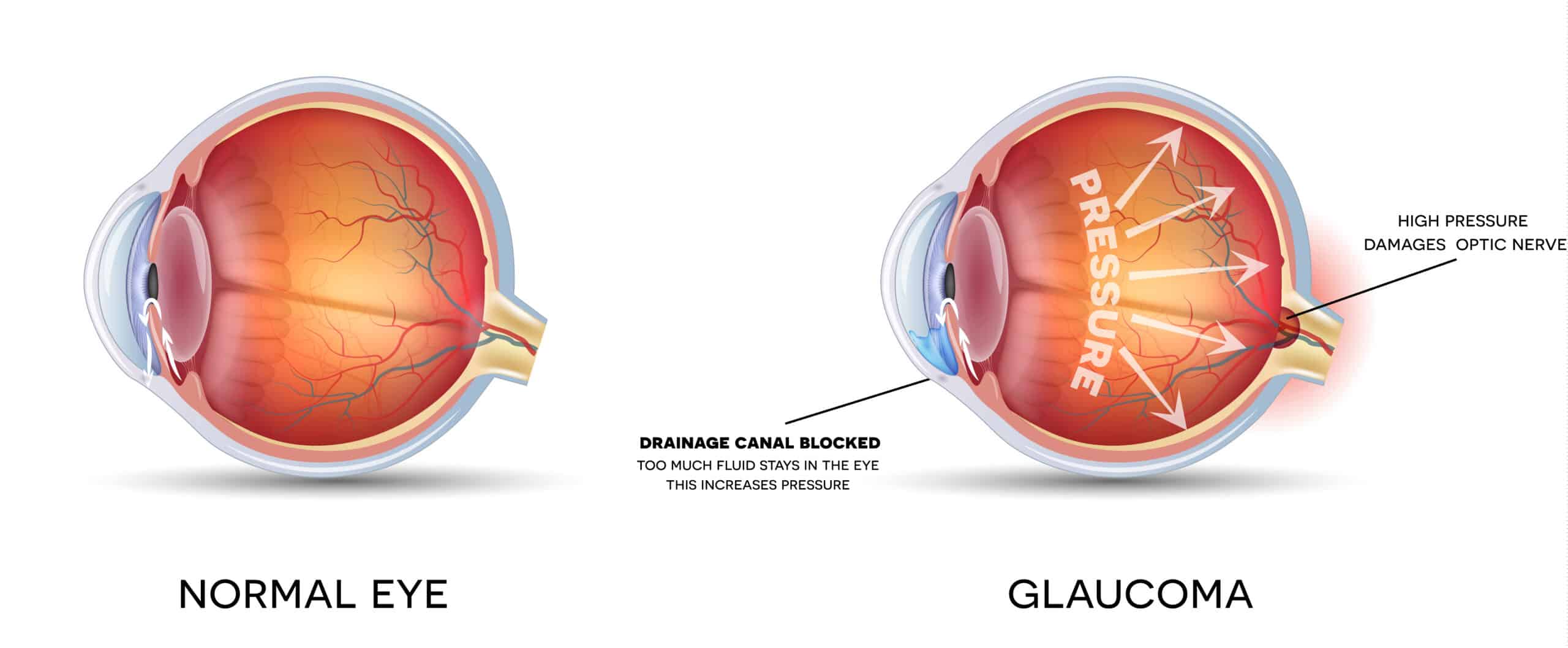
Glaucoma is a group of eye conditions that damage the optic nerve, the part of your eye that transmits visual information to your brain. In a healthy eye, a fluid called aqueous humor consistently flows in and out through a drainage canal to maintain stable intraocular pressure.
In patients with glaucoma, these drainage pathways become blocked or don’t function properly, resulting in a buildup of fluid that raises eye pressure. High intraocular pressure can lead to optic nerve damage, causing partial or complete vision loss.
The two most common types of glaucoma include:
Open-Angle Glaucoma
Open-angle glaucoma is the most common form of the condition, encompassing nearly 90% of cases. It occurs when blockages form in the trabecular meshwork of the eye, part of the drainage canal (drainage angle) that helps drain aqueous humor.
This causes pressure to build up over time, slowly damaging the optic nerve. Open-angle glaucoma typically presents with no symptoms at first, which makes it challenging to catch before it causes permanent vision impairment.
This vision loss starts with your peripheral (side) vision before progressing to affect your central vision. However, damage from open-angle glaucoma is largely preventable by attending frequent eye exams.
At these appointments, your ophthalmologist will use specialized tools to detect changes in your eye before they cause permanent vision loss and prescribe the appropriate treatment to reduce your eye pressure.
Angle-Closure Glaucoma
Angle-closure glaucoma is the second most common form of the condition, encompassing around 10 % of cases. This form occurs when the drainage canal of the eye is too narrow, preventing fluid from draining properly and leading to a rise in intraocular pressure.
While angle-closure glaucoma can cause optic nerve damage over time, similar to open-angle glaucoma, it carries an additional risk of acute angle-closure attacks. These happen when the drainage canal becomes completely blocked, resulting in a sudden rise in intraocular pressure.
Common symptoms of an acute angle-closure glaucoma attack include:
- Severe forehead pain
- Intense eye pain
- Nausea and vomiting
- Seeing halos or rainbows around lights
- Red eyes
- Sudden blurred vision
If you’ve been diagnosed with angle-closure glaucoma and begin experiencing any of these symptoms, seek emergency treatment straight away. These acute attacks can cause rapid, permanent vision loss if not treated promptly.
How is Glaucoma Diagnosed?
Regular glaucoma screenings can help your eye doctor diagnose glaucoma before permanent damage has occurred. These exams involve examining the intricate structures of your eye and measuring your eye pressure. At Somerset Ophthalmology, we also use advanced diagnostic technology such as:
Optical Coherence Tomography (OCT)
Optical coherence tomography (OCT) uses light waves to produce detailed cross-sectional images of your retina. To diagnose glaucoma, your eye doctor will look for irregularities in the optic nerve fiber layer. They can also use OCT to calculate the thickness of the optic nerve fiber layer and monitor any changes over time.
Visual Field Testing
Visual field testing, also known as perimetry, measures how well your peripheral vision is functioning. This testing can help detect blind spots in your side vision that you may not have noticed before.
Treatments for Glaucoma
If your eye doctor detects signs of glaucoma, they will recommend beginning treatment right away. Depending on the severity, type, and progression of your glaucoma, they may suggest one or more treatments, including:
Prescription Eye Drops
The first line of treatment for glaucoma is prescription eye drops, which lower intraocular pressure by reducing the amount of aqueous humor your eye produces or by helping fluid drain more effectively through the drainage angle. These medications require strict compliance to keep your eye pressure stable. If you struggle to remember to apply your eye drops, or they’re not effective at lowering your intraocular pressure, your eye doctor may recommend laser treatments or surgery.

Laser Treatments
Several laser treatments can help improve fluid drainage and reduce eye pressure in patients with glaucoma:
Selective Laser Trabeculoplasty (SLT)
Selective laser trabeculoplasty (SLT) uses low-energy laser light to target melanin-containing cells in the trabecular meshwork, safely clearing blockages and improving drainage.
Laser Peripheral Iridotomy (LPI)
Laser peripheral iridotomy (LPI) promotes proper drainage in patients with angle-closure glaucoma by using a specialized laser to create a small opening in the iris. This reduces intraocular pressure and helps prevent dangerous pressure spikes that can trigger acute angle-closure attacks.
Laser Goniotomy
Laser goniotomy is a procedure that involves using a laser to create microscopic channels in the trabecular meshwork to help fluid drain more effectively. This can be performed during cataract surgery to treat both cataracts and glaucoma in one procedure.
Minimally Invasive Glaucoma Surgeries (MIGS)
Minimally invasive glaucoma surgery (MIGS) is the umbrella term for a group of advanced procedures that are less invasive than traditional procedures and often have reduced recovery times. Some of the MIGS offered at Somerset Ophthalmology include:
STREAMLINE
STREAMLINE is a state-of-the-art device used to create precise goniotomies in the trabecular meshwork, completing the multiple steps of a traditional goniotomy in one unified step. This is achievable through innovative ClickPulse technology, which eliminates the need for implants during or after surgery.
OMNI
OMNI is another MIGS offered at Somerset Ophthalmology that reduces intraocular pressure by combining two procedures into a single procedure: viscodilation and titratable trabeculectomy. This streamlines the surgery process, taking only about 10 minutes to complete.
Traditional Glaucoma Surgeries
If less invasive options are ineffective at lowering your eye pressure, your ophthalmologist may recommend a traditional glaucoma surgery, such as trabeculectomy. This procedure involves creating a new drainage channel for aqueous humor that runs from the inside of the eye to beneath the conjunctiva.

How Minimally Invasive Glaucoma Surgery (MIGS) Works
Minimally Invasive Glaucoma Surgery (MIGS) lowers eye pressure by improving the eye’s natural fluid drainage system.
In most forms of glaucoma, resistance occurs in the trabecular meshwork, which is the eye’s primary drainage filter. MIGS procedures gently enhance or bypass this area of resistance, allowing fluid to drain more efficiently through the eye’s natural pathways.
Depending on the individual patient, treatment may involve:
- Opening or dilating the eye’s natural drainage canal
- Bypassing areas of resistance
- Removing a small portion of obstructed drainage tissue
These procedures are performed through tiny incisions and are designed to:
- Lower intraocular pressure
- Reduce reliance on glaucoma medications (in many patients)
- Preserve normal eye anatomy
- Provide a faster recovery compared to traditional glaucoma surgery
Our practice offers advanced minimally invasive glaucoma procedures tailored to each patient’s needs. The specific technique used is determined based on glaucoma severity, anatomy, and overall treatment goals.
Have you been diagnosed with glaucoma? Schedule an appointment at Somerset Ophthalmology in Troy, MI, to learn more about how our comprehensive diagnostic technology and advanced treatments can help protect your vision for years to come.